WhatsApp Funnel for a Peptides Project in the United Kingdom
How we moved away from direct landing-page sales to WhatsApp conversations, AI UGC creatives, custom events and AI-bot-assisted lead handling.
We didn’t just change the creatives. We changed the conversion point.
In this niche, people aren’t always ready to buy immediately. We moved the first step to WhatsApp: start a conversation, qualify the lead, then work toward a sale.
Real Data From Meta Ads Manager
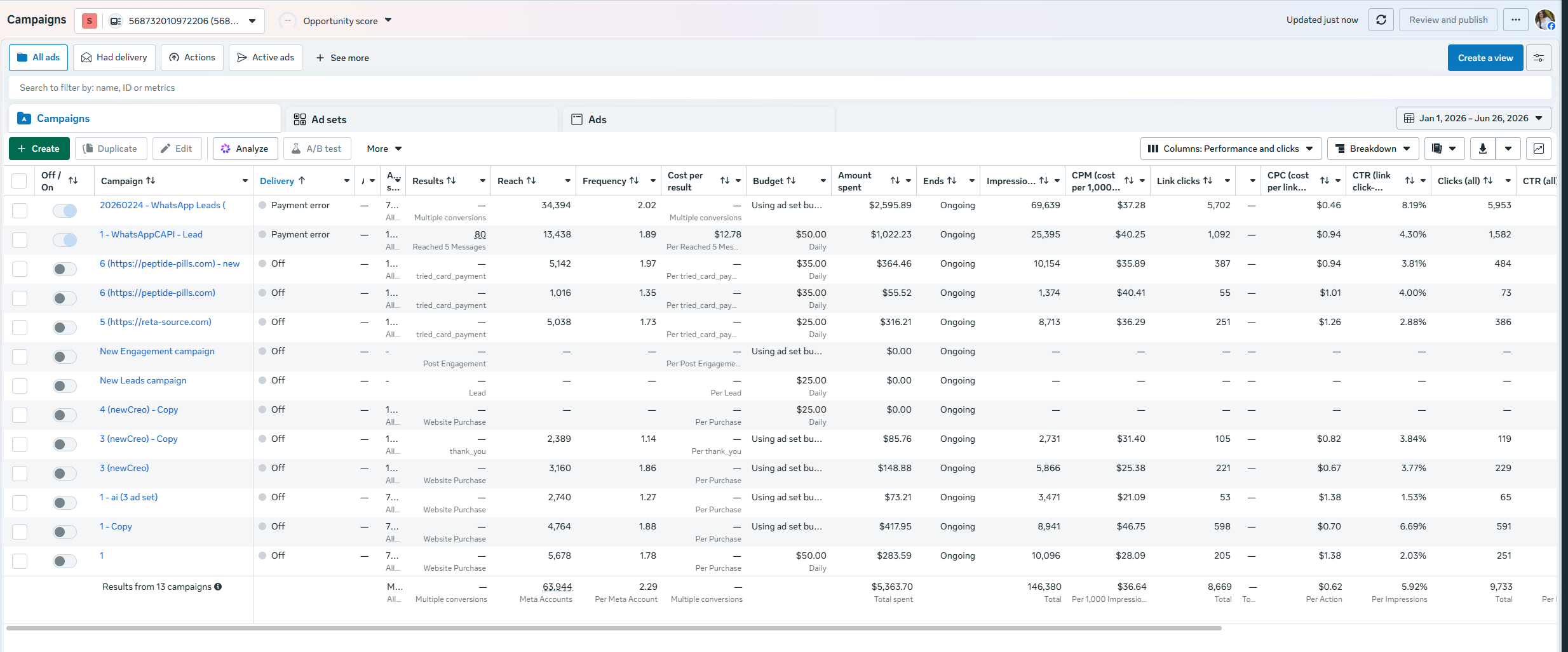
The screenshot shows the scale of the tests: clicks, CTR, CPC, reach, impressions and spend. Client details, domains and technical information may be hidden before publication.
in the best-performing WhatsApp campaign
link CTR in the strongest-performing setup
cost per inbound message, based on internal data
From Traditional Ad Creative — to a Native First Impression
At first, the client supplied conventional designer-made creatives. They looked polished but felt like direct ads. We then tested AI UGC video: the format felt closer to a personal recommendation and was better suited to bringing people into WhatsApp.
Not more polished. More native.
We weren’t trying to make the banner prettier. We changed the format of the first impression: from a direct ad to a video that feels like a recommendation or personal experience.
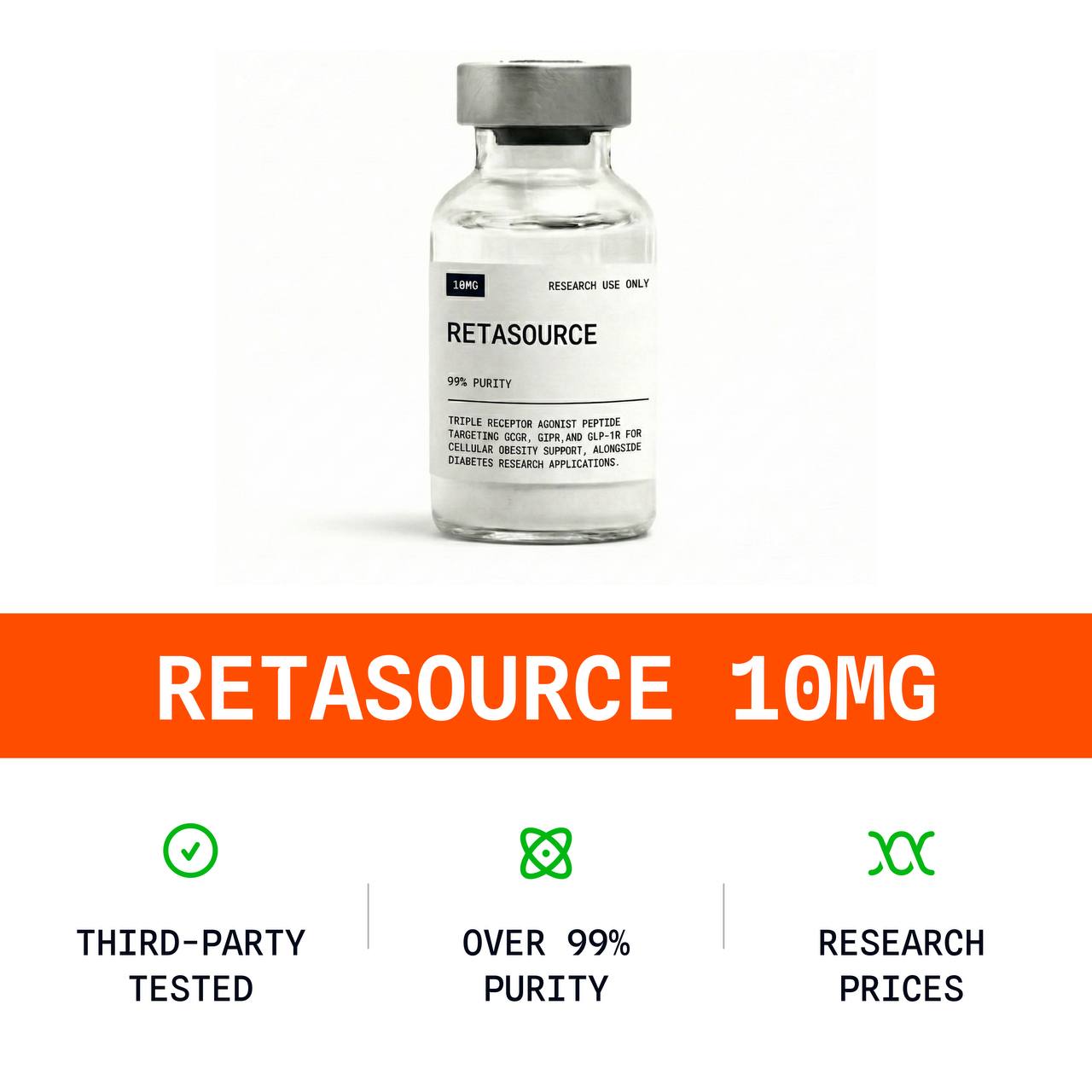
Instead of endlessly refining the banner, we changed the creative approach.
The creative’s job was to start a conversation
A direct “buy now” message doesn’t always work in this niche. People first need context, a chance to ask questions and a reason to trust. That made WhatsApp a natural next step after the UGC video.
Why the switch worked
We looked for a format that reduced the barrier to the first action and led people into WhatsApp, not merely the “best-looking banner.”

We weren’t just testing audiences. We were looking for signals.
You can’t predict the perfect segment upfront in this niche. We tested broad targeting and interests, then looked beyond clicks to see where real WhatsApp conversations started.
We gave the algorithm room to work
With broad audiences, we watched where the market responded without narrowing the hypothesis too early.
We explored different demand angles
Interests weren’t a magic setting. They helped us test different segments and understand where the offer resonated.
We matched the audience with the creative
The same segment could perform differently depending on the presentation. AI UGC created a softer first impression than a direct ad.
The conversation drove the decision
The question wasn’t “where is the cheapest click?” but where someone actually entered WhatsApp and started a meaningful conversation.
How we evaluated each test
We didn’t choose winners solely by top-level metrics. The winning combination was audience, creative, WhatsApp entry point and the quality of the subsequent conversation.
What Actually Moved the Needle in This Case Study
No single setting or “secret” targeting trick delivered the result. We rebuilt the entire funnel — from the first impression to the moment someone starts a real conversation.
an expensive conversion point and a high barrier to purchase.
easier to start talking, ask a question and move toward a sale.
polished, but easily recognized as standard advertising.
the personal-recommendation style encouraged more conversations.
narrowing targeting too early could eliminate a promising hypothesis.
we looked for demand signals rather than a single “perfect” setting.
a cheap click doesn’t necessarily mean a qualified lead.
decisions combined ad data with internal lead-quality signals.
as volume grew, some messages risked being missed or delayed.
helped handle the higher volume faster, but was not a separate service we provided.
The big takeaway: we didn’t just tune the ads. We changed the customer journey.
Rather than pushing people to purchase straight from a landing page, we gave them a more natural journey: see a native creative, open WhatsApp, ask a question and move toward buying through conversation.
over hack
In niches like this, a single setting won’t win. The whole system matters: creative, audience, entry point and lead handling.
Let’s not start with ads. Let’s review the funnel first.
In sensitive niches, the problem is rarely one setting or one audience. We first need to understand the offer, creatives, entry point, restrictions, current funnel and where people are most comfortable starting a conversation — WhatsApp, Telegram, a form or another route.
what the customer needs to understand before making first contact.
a presentation that doesn’t look like a conventional ad banner.
whether to send traffic to WhatsApp, Telegram, a website or a pre-landing page.
testing hypotheses and measuring inquiry quality, not just clicks.